
Copy Image
A deliberate plan is not always necessary for the highest art; it emerges
Paul Johnson
-
-
Copy Image
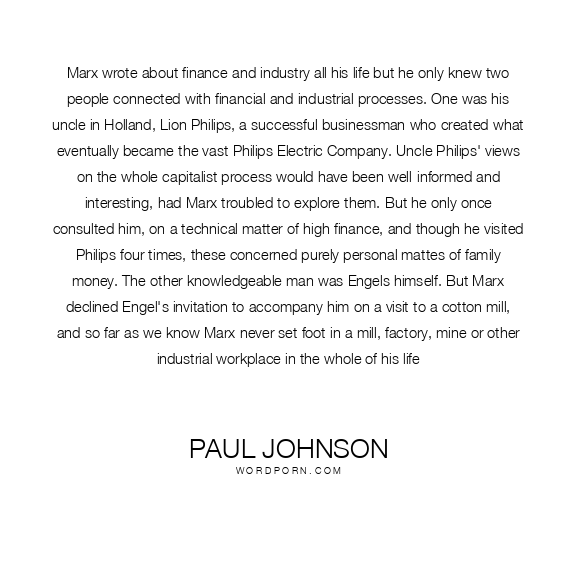
Marx wrote about finance and industry all his life but he only knew two people connected with financial and industrial processes. One was his uncle in Holland, Lion Philips, a successful businessman who created what eventually became the vast Philips Electric Company. Uncle Philips' views on the whole capitalist process would have been well-informed and interesting, had Marx troubled to explore them. But he only once consulted him, on a technical matter of high finance, and though he visited Philips four times, these concerned purely personal mattes of family money. The other knowledgeable man was Engels himself. But Marx declined Engel's invitation to accompany him on a visit to a cotton mill, and so far as we know Marx never set foot in a mill, factory, mine or other industrial workplace in the whole of his life
-
Copy Image
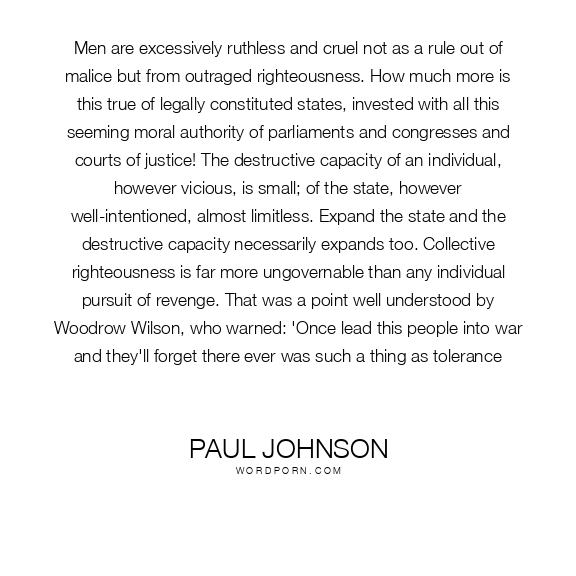
Men are excessively ruthless and cruel not as a rule out of malice but from outraged righteousness. How much more is this true of legally constituted states, invested with all this seeming moral authority of parliaments and congresses and courts of justice! The destructive capacity of an individual, however vicious, is small; of the state, however well-intentioned, almost limitless. Expand the state and the destructive capacity necessarily expands too. Collective righteousness is far more ungovernable than any individual pursuit of revenge. That was a point well understood by Woodrow Wilson, who warned: 'Once lead this people into war and they'll forget there ever was such a thing as tolerance


Post as Image: